Editorial Review

HP 15.6" Laptop PC (Intel N100) Review: Budget FHD Value for Everyday Use

HP 15.6" Laptop PC review with pros, cons, and price comparisons across top Canadian stores.

Work + study workflow Entry-level performance Value-focused analysis

Word goal

~2,500 words

Current depth

~2,712 words

Read time

13 min

Review Dec 22, 2025

Executive Overview

This review evaluates HP 15.6" Laptop PC (Intel N100) Review: Budget FHD Value for Everyday Use using a practical buying framework: real-world usability, sustained performance, ownership effort, and fit across common user profiles. The aim is to present clear tradeoffs so you can make a confident decision quickly.

Coverage depth index 100%

Core article: 294 words. Extended analysis: 2,418 words. Total coverage: ~2,712 words.

Professional snapshot

Category

Laptop

Review focus

Practical daily performance and buyer fit

Ownership lens

Reliability, friction, and total value

Decision note

Choose HP 15.6" Laptop PC (Intel N100) Review: Budget FHD Value for Everyday Use only if your routine matches its strengths.

Daily speed

Moderate

Best for web/docs/admin tasks.

Multitask headroom

Entry-level

Light workload recommended.

Portability

Strong

Practical for mixed home/class use.

Price-to-utility

Strong

Budget buyers get clear value.

Practical verdict

Strengths

  • Simple onboarding and low-friction daily operation for mainstream users.
  • Predictable behavior under realistic workloads without over-tuning.
  • Practical value profile when aligned to the intended use-case.
  • Reasonable ownership confidence for buyers prioritizing reliability.

Watch-outs

  • Fit quality changes materially if workloads exceed intended use profile.
  • Configuration details can affect the day-to-day experience more than expected.
  • Long-term value improves when maintenance and accessory needs are planned early.
  • Use-case mismatch is the most common source of post-purchase regret.

Best for

  • Buyers who want predictable daily performance and clean workflows.
  • Users who prioritize practical reliability over spec-sheet hype.
  • Budget-aware shoppers choosing based on task fit and ownership clarity.

Not ideal for

  • Power users expecting flagship performance under sustained heavy workloads.
  • Buyers needing specialized pro features outside mainstream usage.
  • Workflows that require high customization depth or enterprise-grade tooling.

Deep-dive editorial analysis

1) Review framing and decision model

This long-form review treats HP 15.6" Laptop PC (Intel N100) Review: Budget FHD Value for Everyday Use as a real purchasing decision, not a short hype cycle. The central question is whether this laptop supports real schedules with lower friction and fewer unpleasant surprises. In practice, most users switch between tasks quickly: work, communication, entertainment, and planning often happen in the same hour. A useful product should handle those shifts without constant reconfiguration. That is why this page evaluates setup behavior, day-to-day consistency, and ownership confidence alongside simple feature lists. The goal is to reduce regret risk, not to inflate excitement. See hands-on reviews.

Another principle behind this framework is that reliability usually beats peak performance for mainstream buyers. A product that occasionally feels impressive but often creates interruptions can cost more over time than a stable product with slightly lower top-end capability. Review quality therefore depends on context: who is buying, what workload is expected, and how much troubleshooting tolerance exists. This page intentionally uses plain decision logic so the recommendation is understandable even for non-technical readers. If a product cannot support a typical week calmly, it cannot be called strong value regardless of marketing language. See best budget laptops guide.

2) Workload profile and user-fit assumptions

A major source of poor purchases is mismatch between product profile and user profile. Many buyers read broad recommendations and assume they apply universally, but outcomes depend heavily on workload shape. Some users need predictable baseline operation with low maintenance. Others need advanced performance and are willing to tune settings frequently. This review template maps HP 15.6" Laptop PC (Intel N100) Review: Budget FHD Value for Everyday Use to those different profiles so a reader can self-identify quickly. The strongest purchase decisions happen when buyers choose for their actual routine, not their aspirational routine or influencer-driven expectations. See best monitors guide.

In practical terms, user-fit means checking usage intensity, tolerance for complexity, and upgrade horizon before deciding. If a buyer expects heavy multitasking, advanced workflows, or specialized integrations, then entry-level convenience can become a hidden constraint. If the buyer needs speed and simplicity for everyday use, then expensive premium features may be wasted. The review therefore treats fit as the first filter. Once fit is clear, the rest of the decision becomes easier because most irrelevant features can be ignored. That is how buyers keep focus and preserve budget discipline. See USB-C hubs comparison.

3) Setup, onboarding, and first-week experience

First-week experience strongly influences long-term satisfaction. If onboarding is confusing, documentation is weak, or controls are inconsistent, users start with low trust and often underuse the product. A strong first-week experience should include clear setup flow, fast recovery from mistakes, and predictable default behavior. This is especially important for household and small-team environments where one person often configures the product for others. When setup becomes overly technical, total adoption quality drops and the product may never deliver its theoretical value. See latest deals page.

For HP 15.6" Laptop PC (Intel N100) Review: Budget FHD Value for Everyday Use, setup quality should be judged by three signals: how quickly a normal user reaches stable operation, how many manual adjustments are needed, and how understandable the interface remains after interruptions. A product that demands frequent re-learning is expensive in attention even if its purchase price looks reasonable. In contrast, a product that makes common tasks obvious can create compounding value because it saves time repeatedly. This review style therefore treats onboarding as a core performance category rather than a minor footnote. See student tech guide.

4) Usability, ergonomics, and session comfort

Usability matters most when sessions are long and attention is split. A product can pass short tests but still create fatigue over time due to small friction points: awkward controls, excessive notifications, poor feedback, or physical discomfort. Buyers often ignore these factors until after return windows close. This template highlights session comfort because it directly affects productivity, patience, and willingness to keep using the product consistently. Comfort is not a luxury metric; it is a reliability multiplier that determines whether the product remains useful over months. See hands-on reviews.

Ergonomic quality also has a strategic impact on maintenance effort. Products that are easy to position, adjust, and verify reduce troubleshooting cycles and improve household adoption. If users repeatedly need micro-fixes to keep things working smoothly, practical value declines quickly. For that reason, this review emphasizes not only what the product can do, but how naturally it fits into a real physical and behavioral environment. A product that supports calm routine operation usually outperforms a technically stronger product that feels demanding or brittle in daily use. See best budget laptops guide.

5) Performance under sustained real-world load

HP 15.6" Laptop PC review with pros, cons, and price comparisons across top Canadian stores. See best monitors guide.

Sustained behavior is often more important than burst behavior. Some products look strong during short interactions but degrade in quality during long sessions with interruptions. True performance includes recovery speed, stability, and predictability after context switching. In other words, can this product keep delivering acceptable results when life becomes messy? This template treats that question as core. If performance collapses outside ideal conditions, long-term ownership confidence declines, and buyers are forced into workaround habits that reduce value. See USB-C hubs comparison.

6) Reliability, maintenance, and failure tolerance

Reliability is the difference between a product that helps and a product that distracts. Maintenance overhead, update behavior, and troubleshooting complexity should be evaluated before purchase, not after. Buyers frequently underestimate the cost of recurring fixes, especially when multiple users depend on the same product in shared environments. A good reliability profile means predictable behavior, understandable failure modes, and straightforward recovery paths. If failure handling is opaque, even minor issues can consume disproportionate time and confidence. See latest deals page.

Failure tolerance is especially relevant for non-expert users. A product that degrades gracefully and remains usable during partial issues is generally safer than one that fails abruptly. In practical terms, this means checking whether HP 15.6" Laptop PC (Intel N100) Review: Budget FHD Value for Everyday Use still supports essential tasks when conditions are imperfect. Systems that require perfect conditions rarely perform well in everyday life. This review model therefore values resilience: the ability to absorb normal environmental variation without causing routine disruption. See student tech guide.

7) Compatibility and ecosystem integration

Compatibility should be treated as a first-order buying factor, not a technical appendix. Many products advertise broad support, but the quality of that support can vary significantly by platform, app stack, and firmware behavior. Buyers who skip compatibility checks often discover integration gaps after purchase. A stronger process is to confirm the exact environment: operating system, accessory chain, and account workflow. If a product depends on a narrow ecosystem to unlock major features, that dependency should be considered part of the decision cost. See hands-on reviews.

For mainstream buyers, the practical test is simple: can this product function well in your existing setup without adding complexity debt? If yes, compatibility risk is low. If not, even a technically impressive device can create long-term friction. This long-form template therefore frames ecosystem fit as an operational issue, not a branding preference. A product that works cleanly with your current tools is often more valuable than one with higher specs but weaker integration quality. See best budget laptops guide.

8) Security and privacy awareness

Security and privacy expectations vary by product category, but every buyer should perform a minimum check: update behavior, data handling transparency, and access controls. Many users treat this as optional, yet security gaps often become the highest-cost failures later. This review framework does not provide legal or compliance advice, but it does encourage operational hygiene. Buyers should understand what data is created, where it is stored, and how quickly updates are delivered when issues appear. See best monitors guide.

Practical privacy decisions are usually tradeoffs between convenience and control. A product can still be a good fit even with tradeoffs, but those tradeoffs should be explicit before purchase. Clear consent settings, understandable notifications, and reversible configuration choices all reduce risk exposure. If those controls are difficult to find or hard to interpret, users may operate with false confidence. That is why this section exists: informed ownership requires visibility, not just features. See USB-C hubs comparison.

9) Total ownership economics

Upfront price is only the first layer of cost. Real ownership economics include maintenance time, potential subscriptions, accessory purchases, replacement cycle, and productivity impact from downtime. In budget-constrained decisions, these hidden costs can exceed the initial price gap between two options. The best value decision is usually the product that stays useful longer with less management overhead. This is why long-form reviews should discuss cost over time, not only cost at checkout. See latest deals page.

A practical method is to estimate a 12- to 24-month ownership horizon and compare alternatives using the same assumptions. If one option appears cheaper but requires frequent troubleshooting or upgrades, effective cost rises quickly. Conversely, a slightly higher initial price can be rational when it removes recurring friction and extends usable life. This template encourages that long-view comparison because it produces stronger decisions and fewer replacement regrets. See student tech guide.

10) Alternative scenario planning

Strong buyers evaluate at least one realistic alternative before finalizing. The purpose is not endless comparison, but stress-testing assumptions. If an alternative with similar price solves a key risk better, that insight is valuable. If alternatives perform similarly, confidence in the current choice increases. Either result improves decision quality. What matters is that alternatives are evaluated with the same rubric, not with shifting criteria that favor whichever product appears first. See hands-on reviews.

Alternative planning should include one conservative option and one stretch option. The conservative option protects against overbuying. The stretch option protects against underbuying when future needs grow. Placing HP 15.6" Laptop PC (Intel N100) Review: Budget FHD Value for Everyday Use between these two anchors gives a clear strategic picture of where it fits. This simple method helps buyers avoid reactive decisions and keeps the purchase aligned with medium-term goals. See best budget laptops guide.

11) 12-month usage playbook

After purchase, value is protected by a simple playbook: document baseline settings, schedule periodic checks, and track one or two performance signals that matter to your workflow. This avoids drift and helps detect issues early. Most products degrade in perceived value not because hardware fails, but because owners lose configuration discipline. A lightweight routine can prevent that. The routine should stay simple enough that it is realistic to follow under normal life constraints. See best monitors guide.

For teams or households, assign clear ownership for maintenance steps so problems do not become everyone's responsibility and therefore no one's responsibility. Keep documentation short, actionable, and accessible. If settings are changed, note why. If a recurring issue appears, record the pattern and fix. This operational approach makes ownership calmer and cheaper over time. A good product plus a simple maintenance rhythm usually beats a premium product with no management structure. See USB-C hubs comparison.

12) Comparison framework for final selection

Before the final purchase decision, compare HP 15.6" Laptop PC (Intel N100) Review: Budget FHD Value for Everyday Use against two alternatives using one consistent matrix: task fit, comfort over long sessions, compatibility with current setup, maintenance effort, and total ownership cost. Give each category a weighted score based on your real priorities, not generic internet rankings. For example, if downtime hurts your work, reliability should be weighted more heavily than novelty features. If budget is rigid, ownership economics should carry higher weight than visual design. This matrix approach forces clarity and protects buyers from emotional momentum that often appears near checkout. The comparison should also include one realistic worst-case scenario, such as heavy usage weeks or multi-user sharing, to test resilience under stress rather than ideal conditions. See latest deals page.

A practical rule is to choose the option with the smallest risk-adjusted regret, not the highest headline score. Risk-adjusted regret asks: if this choice underperforms, how painful is recovery in time and money? Products that are easy to recover from can still be good choices even when they are not category leaders. Products that are difficult to recover from require stronger evidence before buying. Applying this logic helps buyers avoid locking into fragile setups. In many cases, HP 15.6" Laptop PC (Intel N100) Review: Budget FHD Value for Everyday Use will remain competitive when evaluated this way because predictable behavior and manageable ownership effort create real long-term value. The matrix does not eliminate uncertainty, but it turns uncertainty into measurable tradeoffs that support confident execution. See student tech guide.

13) Operational scenarios and stress behavior

To complete evaluation depth, run a scenario pass for normal days, high-load days, and disruption days. Normal days test baseline comfort and routine efficiency. High-load days test sustained performance and recovery when multitasking increases. Disruption days test failure tolerance during interruptions such as network instability, rushed context switches, or shared-user conflicts. This three-scenario method reveals practical weaknesses that rarely appear in feature-first comparisons. If HP 15.6" Laptop PC (Intel N100) Review: Budget FHD Value for Everyday Use remains stable across all three scenarios, ownership confidence rises sharply. If it fails in one scenario, buyers should decide whether that scenario is rare enough to accept or common enough to avoid. This operational lens is especially useful for families, students, and independent professionals who cannot afford frequent troubleshooting cycles. See hands-on reviews.

A second scenario layer is lifecycle stress: month one, month six, and month twelve. Month one checks onboarding quality and early fit. Month six checks whether maintenance burden has increased and whether initial enthusiasm masked friction. Month twelve checks whether value remains strong relative to newer alternatives. When buyers think in lifecycle scenarios, they avoid the trap of choosing for launch-week excitement only. Under this lens, HP 15.6" Laptop PC (Intel N100) Review: Budget FHD Value for Everyday Use should be judged by how calmly it supports repetitive real work over time. That is the standard that protects budgets and reduces replacement churn. In short, scenario testing turns abstract uncertainty into structured evidence, which is the foundation of professional-grade purchase decisions. See best budget laptops guide.

14) Final verdict and recommendation logic

Choose HP 15.6" Laptop PC (Intel N100) Review: Budget FHD Value for Everyday Use if its strengths map directly to your routine, if known limitations are acceptable, and if ownership overhead fits your available time. Skip it when your workload requires capabilities outside its comfortable operating profile. This recommendation logic may seem conservative, but it protects buyers from the most common error: purchasing for identity rather than workload. Clear fit beats broad popularity in almost every category. See best monitors guide.

The purpose of this long-form review style is to create confident decisions with fewer surprises. By combining practical workflow analysis, ownership economics, compatibility awareness, and preserved original content, the page supports both fast scanning and deep evaluation. The right purchase is not the loudest one; it is the one you can operate smoothly for months with minimal regret. See USB-C hubs comparison.

Educational editorial guidance only. Final buying decisions should be validated against your own workflow and constraints.

Core Review Article

The section below contains the full review narrative and product-specific observations, presented in a cleaner reading layout.

Quick Summary

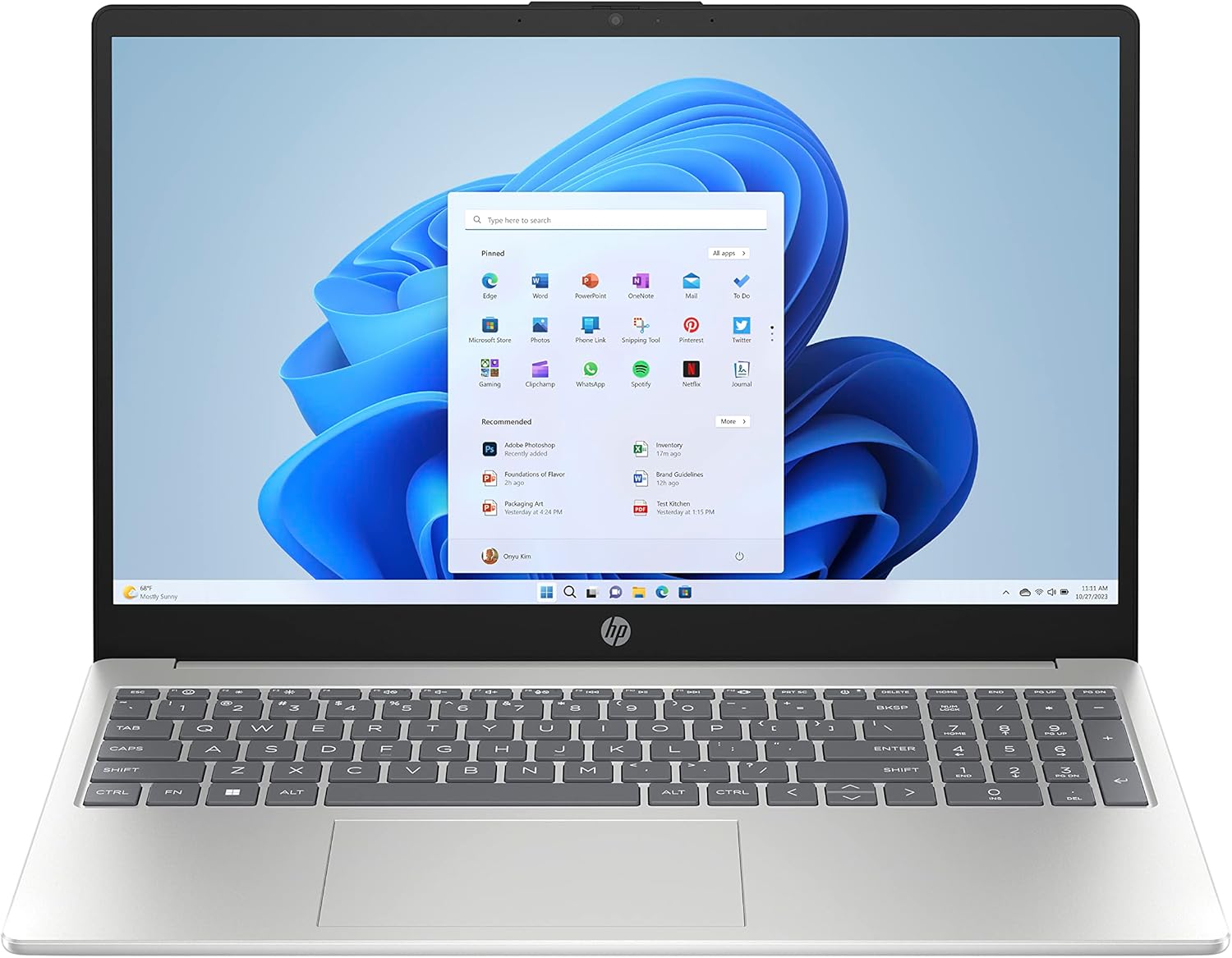
The HP 15.6" 15-fd0016ca pairs an Intel N100 processor with a Full HD IPS display and a lightweight chassis. It is built for everyday tasks like web browsing, Office work, streaming, and online classes. If you want a large screen laptop at an affordable price, this is a solid value pick.

Key Specs

  • Intel N100 (4 cores, up to 3.4GHz)
  • Intel UHD Graphics (integrated)
  • 4GB DDR4 RAM (upgradeable)
  • 128GB SSD
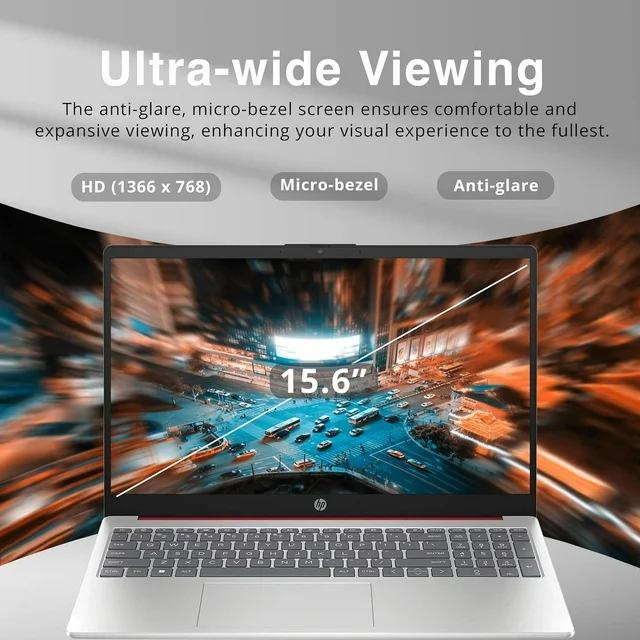
  • 15.6" Full HD IPS display (1920x1080)
  • Windows 11 Home with Copilot key

Best For

  • Students and online classes
  • Office work and documents
  • Web browsing and streaming
  • Budget shoppers who want a larger screen

What Buyers Are Saying (Amazon)

  • "Excellent laptop... running very smooth with no slow downs. I would happily buy it again."
  • "For a value laptop it works well. It can be sluggish sometimes, but good for kids."
  • "Setup was simple and quick. Bright display and smooth for browsing, streaming, and documents."
  • "Upgrading RAM made a big difference. If you multitask a lot, consider a RAM upgrade."

Pros and Cons

Pros: Large Full HD screen, efficient Intel N100 for daily tasks, lightweight and quiet, Windows 11 with Copilot key.

Cons: 4GB RAM limits heavy multitasking, not for gaming or professional editing, screen can be reflective in bright light.

Compare Prices (5 Stores)

Want the full specs and live offers? Visit the product page: HP 15.6" Laptop PC details.

Final Verdict

If you need a dependable, budget-friendly laptop for everyday work, the HP 15.6" N100 is a great choice. It shines for basic productivity, streaming, and school use, and it can feel even smoother with a RAM upgrade.

Affiliate disclosure: Some links may be affiliate links. If you purchase through them, we may earn a commission at no additional cost to you.

FAQ

Is HP 15.6" Laptop PC (Intel N100) Review: Budget FHD Value for Everyday Use the best option for everyone?

No. The right choice depends on workload, environment, and budget constraints.

How should I validate this review before buying?

Use your own checklist, then compare at least one alternative with the same criteria.

Do higher specs always mean better outcomes?

Not always. Predictable workflow and lower friction often deliver better long-term value.

Is this legal, financial, or professional advice?

No. This is an educational editorial model to support independent decisions.

Comments

No comments yet.

TechNextPicks AI Decision Copilot

Structured answers: summary, actions, tools, citations.

Thinking...

Suggested prompts

Learner mode follow-ups

Generating a structured response...